

AI Warehouse Management
A warehouse that sees, counts, and self-corrects
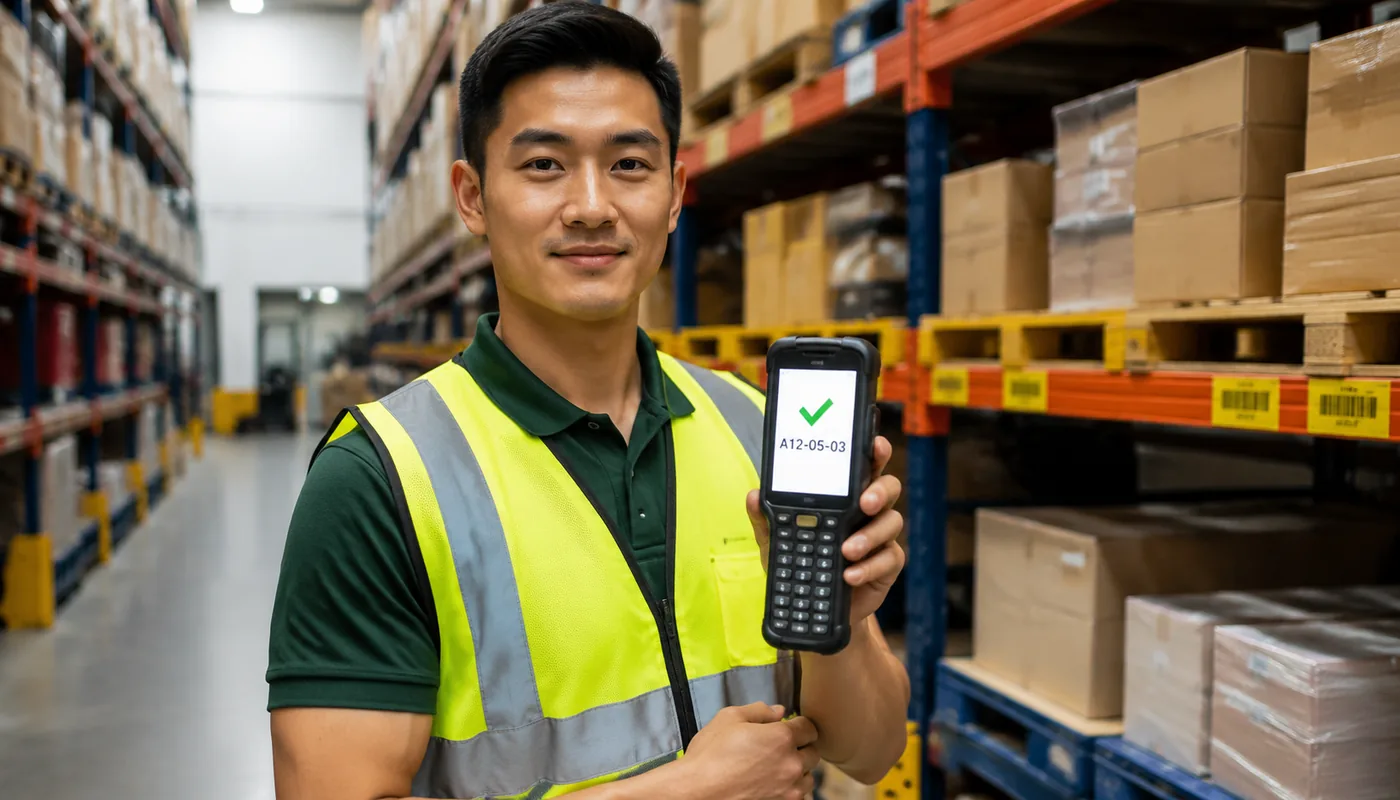
AI-native WMS that reconciles every inbound pallet by camera, slots stock where demand wants it, and catches the wrong item at pack — not at the customer. On-prem, API-only, and priced for SMEs.
Why the warehouse keeps bleeding margin
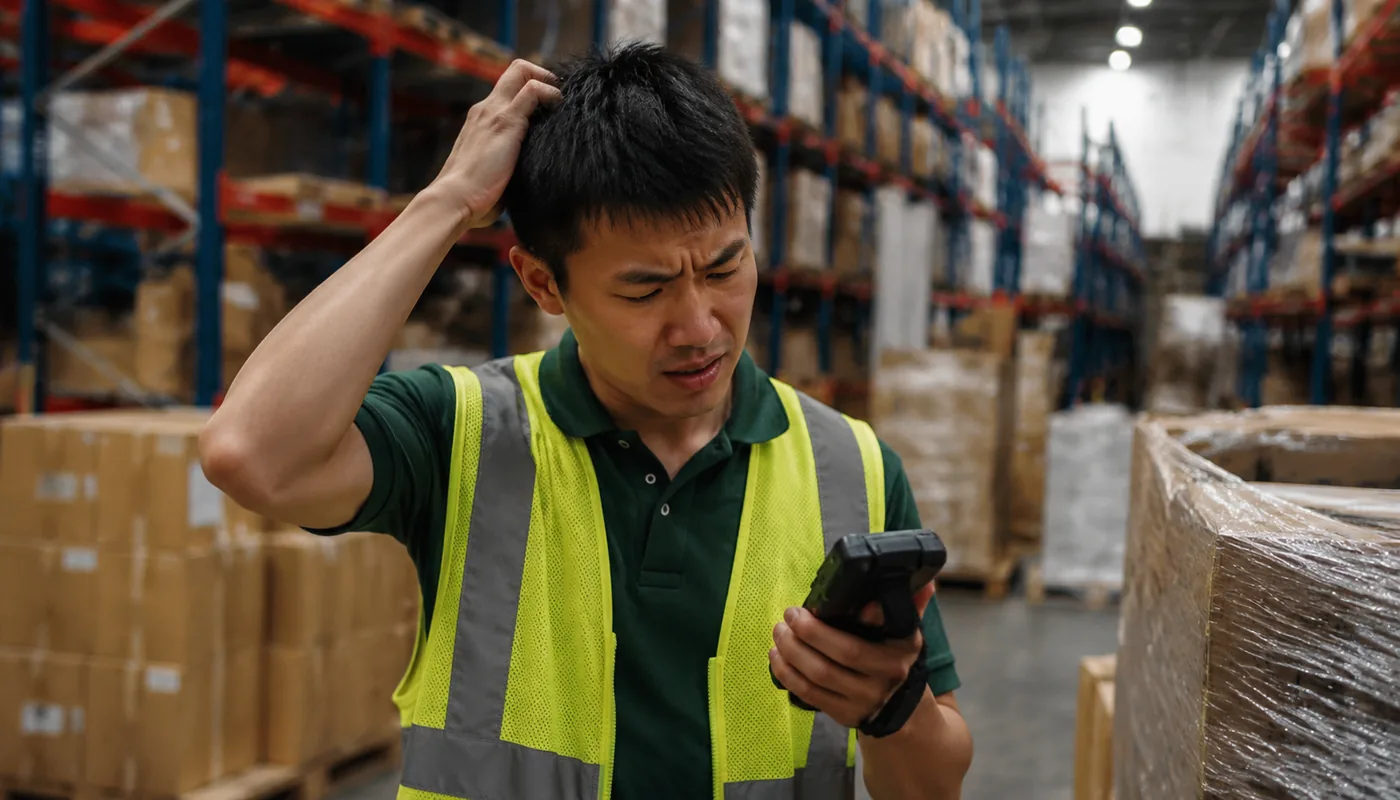
Most SME warehouses don't have a software problem — they have a visibility problem that compounds every shift.
Manual counts, wrong bins
Receiving is keyed by hand and put-away lands in the nearest open slot, not the right one. Within weeks the system says one thing and the shelf says another — so safety stock balloons and pickers chase ghosts.
Slow pick/pack, no live visibility
Pickers backtrack the same aisles because routes are fixed, not optimized, and no one sees order status until it's late. Mis-ships surface as a customer complaint and a return label, days after the cost was locked in.
Guesswork labor and returns chaos
Shifts are staffed off last week's gut feel, so you over-pay on slow days and miss SLAs on peaks. Returns sit unbooked because no one has time — and enterprise WMS suites that fix this cost more than the margin they'd save.
The BytePlus stack that powers it
Vision, optimization, and anomaly detection — the same models proven inside ByteDance logistics, deployed on-prem behind your firewall.
The warehouse loop
The whole warehouse, on one AI loop.
Ten connected steps run the floor as one system: dock cameras and stock records feed a living knowledge base, strategy becomes a signed peak plan, every pick, pack and dispatch is tracked — and what shipped feeds the next cycle.
- Step 01 · Stock truth — Make the system and the shelf agree — permanently. API connectors pull your WMS, ERP and order feeds; dock cameras and scanners stream what arrived and moved. A Data Agent cross-links it all into one stock-truth universe — every bin, pallet and PO on a single graph.
- Step 02 · Demand signals — See demand and disruption before they hit the dock. Guided by what your stock truth says matters, the AI scans order spikes, weather, port congestion and freight rates — filing each signal into a separate external-intelligence base, kept apart from your internal records.
- Step 03 · Strategy — Turn stock truth and demand into slotting strategy. Internal stock truth meets external signals in live analysis, human and AI side by side. Out come calls you can defend: re-slot the golden zone for Q4, staff to wave-based forecasts, gate every pack lane with vision QC.
- Step 04 · Peak plan — A peak plan in hard numbers, signed off by the floor. The strategy becomes a peak plan with hard targets: 99.5% inventory accuracy, +38% lines picked per hour, −71% mis-picks at pack, −28% labor cost per order. You review, adjust and sign off before anything cascades.
- Step 05 · Distribution — Route every task to the right zone and shift. The peak plan splits into tasks routed across six floor functions — Receiving, Picking, Packing, Returns, QC and Transport — at the right seniority, with tracking live from the moment each one lands.
- Step 06 · Execution — One warehouse board, a different view per role. Ops managers see wave progress across the floor; shift leads see their zone; pickers see the next task, nothing more. Write-offs and slotting overrides route upward for approval — no more end-of-shift status chasing.
- Step 07 · Floor content — Generate the floor's material — SOPs, signage, training clips. When a task needs material, AI drafts it from the same knowledge base — a re-slot SOP, aisle signage, a 15-second retraining clip with OmniHuman and Seedance. Yesterday's mis-pick exceptions become tomorrow's toolbox talk.
- Step 08 · Pack check — Every order scored at the bench — below the bar, it stops. A vision check at pack scores every order — item, quantity, label, carton. Below the threshold it stops at the bench and is redone. Caught here it costs cents; caught by the customer it costs a return.
- Step 09 · Dispatch — Dispatch by channel cut-off, then listen to every delivery. Orders ship against each channel's cut-off, with one dashboard tracking orders, units and share per channel. Delivery feedback files into a Respond database and — once a human approves — feeds back into steps 1, 2 and 7.
- Step 10 · Improvement — Close the loop — the warehouse keeps its own books. Each cycle audits itself: winning re-slots stay, look-alike bins get split, and carrier-delay patterns feed stock truth (step 1), the demand scan (step 2) and floor content (step 7) — so the next peak runs tighter.
What changes after
Not a faster scan gun — a warehouse that keeps its own books straight.
+38%
Lines picked per hour
-71%
Mis-pick rate
99.5%
Inventory accuracy
How we roll it out
Five staged steps, live in weeks — risk contained to one zone before you scale.
Assess
Map flows, bins, and your real count accuracy — and find the lanes losing the most margin.
Connect
Link your WMS/ERP and dock cameras by API, on-prem. Native systems untouched.
Clean
Reconcile master data and bin locations so the AI starts from a truthful map.
Pilot
Run one zone or SKU class live and prove accuracy and throughput on real orders.
Scale
Roll out across the warehouse with roles, permissions, and labor forecasting on.
The ROI case
Fewer mis-ships, leaner labor, and stock you can finally trust on the screen.
< 5 mo
To payback
4.6×
Return on spend
-28%
Labor cost per order
Proven inside ByteDance logistics at scale before it ever shipped to you — and the compliance and security are handled by the service we deliver on BytePlus infrastructure.
The service we deliver runs on BytePlus infrastructure, certified to:
- ISO 9001
- ISO 20000
- ISO 22301
- ISO 27001
- ISO 27017
- ISO 27018
- ISO 27701
- MTCS Level 3
- CSA STAR
- SOC 1
- SOC 2
- SOC 3
- PCI DSS
Ready to see your warehouse run itself?
Keep your WMS. Add the layer that makes every count true and every pick right.